




What did the BOIP decide in the GYMSHARK vs SHARKYS GYM opposition?
This school example decision of two trade marks battling it out, once again demonstrates the importance of dominant elements in trade marks – even where the word order is reversed and the contested sign is a combined word and figurative mark.
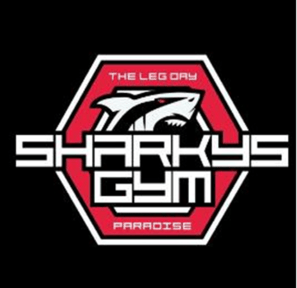
On 26 January 2026, the Benelux Office for Intellectual Property (BOIP) ruled that SHARKYS GYM may not be registered as a trade mark. The opposition filed by Gymshark Limited, an internationally known sports and lifestyle brand behind GYMSHARK, was upheld in full on the grounds of likelihood of confusion.
Which BCIP provision governs likelihood of confusion in opposition proceedings?
The Benelux Convention on IP, article 2.2ter(1)(b) reads:
‘1. A trademark shall, in case an opposition is filed, not be registered or, if registered, shall be liable to be declared invalid where (…) b. because of its identity with, or similarity to, the earlier trademark and the identity or similarity of the goods or services covered by the trademarks, there exists a likelihood of confusion on the part of the public; the likelihood of confusion includes the likelihood of association with the earlier trademark’ (Underlining added)
The application for the combined word/figurative mark SHARKYS GYM, covered fitness and sports services in trade mark class 41. Gymshark Limited opposed the application on the basis of its earlier GYMSHARK international registrations, two word marks and one word/figurative mark, which also cover, among other things, sport and fitness services.
According to Gymshark, the signs are visually, phonetically and conceptually similar, and the services are identical or highly similar, giving rise to a likelihood of confusion within the meaning of article 2.2ter(1)(b) BCIP.
How did the BOIP assess similarity between the GYMSHARK and SHARKYS GYM signs?
The BOIP indeed concluded that there is a trade mark infringement, based on this test, specifically based on the assessment of the similarities of the signs at issue and the goods and services involved.
The BOIP first observes that the element “GYM” is descriptive for the services at issue. As a result, the focus shifts to the element SHARK / SHARKYS, which is deemed “the most distinctive” component of both signs.
In the case of combined word/figurative marks, according to the BOIP the word elements often have a greater impact on consumers than figurative components, since marks are usually referred to verbally.
Although SHARKYS GYM contains additional figurative elements and a tagline, the core element “shark” is fully retained. The suffix “-ys” and the reversal of word order (“GYMSHARK” versus “SHARKYS GYM”) are insufficient to neutralise the overall visual and phonetic similarity.
Conceptually, both signs convey the same ideas: a shark and a gym. According to the BOIP, this is sufficient to establish conceptual similarity for the relevant (Benelux) public, which is assumed to have a good command of the English language.
Key argument of the applicant was that ‘Gymshark’ is primarily a clothing brand and does not operate fitness centres. This argument was rejected however. The BOIP reiterates that the comparison must be based solely on the services as listed in the register, not on actual or intended use.
The sport and fitness services in Class 41 covered by the earlier marks were found to be identical or highly similar to those claimed by the contested application.
Why did the BOIP find a likelihood of confusion despite the reversed word order?
Thus, this leads to likelihood of confusion (para 49, office translation):
“In this case, there is a certain visual and auditory similarity and conceptual similarity between the signs. The services concerned are identical or strongly similar. On the basis of these and the other factors mentioned above, and having regard to their interdependence, the Office is of the opinion that there is a likelihood of confusion within the meaning that the public may believe that the services indicated by the invoked mark 2 and the services of the contested sign originate from the same undertaking or, where appropriate, from economically linked undertakings.”
What does this decision mean for trade mark protection strategy?
The BOIP concludes that the relevant public may indeed believe that the services originate from the same undertaking or from economically linked undertakings, and concludes that there is a likelihood of confusion. The opposition was therefore upheld, the SHARKYS GYM mark was refused registration.
This decision shows that either 1) reversing word order and/or 2) using other figurative elements rarely suffices to take away the risk of likelihood of confusion, as this will often not create sufficient distance where the core elements remain the same. Also, 3) the broad registration of classes by the trade mark owner proved decisive; the wider specification was regarded even though the trade mark is not yet actively used for all listed services.
If you have any questions regarding trade mark registration feel free to contact us.